


Network Security Solutions in Kenya
Network Security Solutions in Kenya: 5 Reliable Ways to Protect Your Network
Reliable Network Security Solutions in Kenya help businesses, offices, schools, institutions and other organizations protect users, devices, applications and business data from unauthorized access and network threats. A secure network should combine strong perimeter protection with access control, segmentation, secure wireless connectivity, monitoring and regular maintenance.
M Heritage Technologies provides networking solutions designed around the size, applications and security requirements of each organization. From managed switches and secure Wi-Fi to firewall-based protection and network monitoring, the goal is to build a network that remains productive while reducing unnecessary security exposure.
What Are Network Security Solutions in Kenya?
Network Security Solutions in Kenya are the technologies, configurations and professional services used to protect a business network from unauthorized access, malicious traffic, accidental exposure and other security risks. They can include firewalls, access control lists (ACLs), VLAN segmentation, secure wireless networks, VPNs, authentication, monitoring, firmware updates and security-focused maintenance.
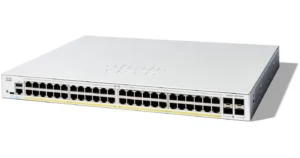
Security should not be treated as a single device. A firewall may protect the network perimeter, while switches, access points and endpoint policies help control what happens inside the network. For example, Cisco Catalyst 1300 switches support MAC, IPv4 and IPv6 ACLs that can control which traffic is admitted or denied.
5 Key Network Security Solutions in Kenya
1. Next-Generation Firewalls
A firewall is an important security control between trusted internal networks and external networks such as the Internet. Modern next-generation firewalls can provide traffic inspection, application control, VPN capabilities, threat protection and centralized security policies, depending on the model and licensing.
Fortinet FortiGate NGFWs are designed to combine networking and security functions and support environments ranging from branch offices to enterprise and data-center deployments.
When selecting a firewall, consider Internet bandwidth, number of users, VPN requirements, security services, future growth, redundancy and management requirements rather than choosing only by port count.
2. Access Control and Authentication
Not every user or device should have unrestricted access to every network resource. Access control helps organizations define who or what can connect and what traffic is permitted.
Managed switches can support security policies through ACLs, VLANs, authentication and other controls, depending on the model. Cisco’s Catalyst 1300 documentation, for example, describes ACLs for filtering ingress traffic and supports MAC, IPv4 and IPv6 ACL types.
For offices, this can help separate employee systems, guest users, servers, IP phones, CCTV equipment and other connected devices according to business requirements.
3. Network Segmentation and VLAN Security
Network segmentation reduces unnecessary communication between different groups of devices. A common design may separate staff computers, guest Wi-Fi, IP phones, CCTV cameras, servers and management systems into different VLANs.
Segmentation can limit the impact of a compromised device and make it easier to apply different access rules. It should be planned carefully so that required services can still communicate securely between the appropriate network segments.
4. Secure Wi-Fi and Wireless Access
Wireless networks are a major access point for users, visitors and mobile devices. Secure Wi-Fi should use strong authentication and encryption appropriate to the organization’s equipment and security policy. Guest access should normally be separated from internal business resources.
Wireless security should also include appropriate access-point placement, strong administrator credentials, firmware updates, controlled guest access and monitoring. Business Wi-Fi can be integrated with VLANs and other network controls to create a more structured security architecture.
5. Monitoring, Updates and Security Maintenance
Security is not finished when equipment is installed. Regular monitoring and maintenance help identify unusual traffic, configuration problems, outdated firmware, failed devices and other risks.
A maintenance program can include configuration backups, firmware reviews, log checks, access reviews, password-policy checks, device health monitoring and documentation. Fortinet also provides centralized management, analytics and security services for FortiGate environments, depending on the deployment. citeturn0search0turn0search11
Protecting Connected Devices on the Network
Modern organizations connect many devices to the same infrastructure. CCTV cameras, NVRs, IP phones, printers, computers, servers, access points and switches can all become part of the organization’s security surface.
Hikvision network cameras and Fanvil IP phones are examples of connected business devices that depend on properly configured network infrastructure. They should be placed on appropriate network segments, protected with strong credentials and kept updated according to the manufacturer’s guidance.
Real network infrastructure also matters. The Cisco Catalyst 1300 and D-Link DGS-F1210 examples shown on this page illustrate managed network equipment that can form part of a controlled and secure LAN architecture.
How to Choose Network Security Solutions in Kenya
- Assess the network: Identify users, devices, applications, Internet links and critical systems.
- Define access requirements: Decide who needs access to servers, applications, CCTV, VoIP and other resources.
- Use segmentation: Separate guest, staff, voice, surveillance and management traffic where appropriate.
- Select the right firewall: Match firewall performance and security features to current traffic and expected growth.
- Secure wireless: Use appropriate authentication, encryption and guest-network controls.
- Plan maintenance: Schedule updates, backups, monitoring and periodic security reviews.
Why Choose M Heritage Technologies?
M Heritage Technologies helps organizations plan, deploy and maintain reliable networking infrastructure in Kenya. Our approach focuses on practical network design, appropriate equipment selection, secure configuration and ongoing support.
Whether you need a firewall, managed switch, secure wireless network, network segmentation or security-focused maintenance, we can help assess your environment and recommend a solution that fits your organization.
Explore our Networking Solutions in Kenya, Managed Network Switches in Kenya, Wireless Networking Solutions in Kenya, Network Installation Services in Kenya and Network Maintenance Services in Kenya.
Frequently Asked Questions
What are Network Security Solutions in Kenya?
They are technologies, configurations and professional services used to protect networks, devices, users and data from unauthorized access and network threats.
Do small businesses need network security?
Yes. Small businesses can still have sensitive customer information, financial data, IP phones, CCTV, cloud services and Internet-connected devices that require appropriate protection.
What does a firewall do?
A firewall controls and inspects network traffic according to configured security policies. Advanced firewalls can provide additional functions such as application control, VPN and threat protection, depending on the model and licensing.
Why use VLANs for network security?
VLANs can separate different groups of devices and users, helping reduce unnecessary communication and making security policies easier to apply.
How often should network security be reviewed?
Security should be monitored continuously, while configurations, firmware, access permissions and backups should be reviewed regularly according to the organization’s risk and operational requirements.
Get Network Security Support in Kenya
Need help securing your office or business network? Contact M Heritage Technologies for professional Network Security Solutions in Kenya, including secure network design, firewall deployment, managed switching, wireless security, segmentation and ongoing maintenance.