


CCTV Installation Services in Kenya
CCTV Installation Services in Kenya: 7 Steps for Reliable Security
CCTV Installation Services in Kenya provide the professional planning, mounting, cabling, configuration and testing needed to turn surveillance equipment into a dependable security system. A successful installation is not simply about putting cameras on walls. Camera position, viewing angles, network connectivity, power, recording, storage and remote access all need to work together.
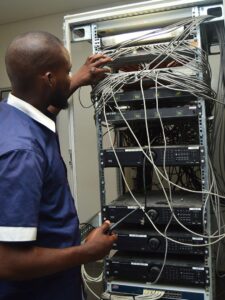
Why Professional CCTV Installation Matters
The performance of a CCTV system depends heavily on how it is installed. A camera placed too high, facing direct sunlight or covering the wrong area may produce footage that is less useful during an incident. Poor cable routing, inadequate power and incorrect NVR configuration can also cause avoidable system problems.
Professional installation focuses on the complete surveillance environment. This includes identifying important areas, selecting appropriate cameras, planning cable routes, configuring recording and checking that the finished system performs as intended.
7 Steps in Professional CCTV Installation
1. Site Assessment
The first step is to understand the property and its security requirements. An assessment should identify entrances, exits, parking areas, perimeter zones, reception areas, corridors, storage rooms, cash points and other locations where surveillance is required.
2. Camera Selection
The correct camera depends on the location and objective. Fixed dome and bullet cameras are useful for defined viewing areas, while PTZ cameras can provide active monitoring and optical zoom across larger areas. Resolution, low-light performance, weather protection and intelligent features should be considered where appropriate.
3. Camera Placement
Camera position should provide useful coverage while minimizing blind spots. Installers should consider mounting height, viewing angle, lighting conditions, entrances and potential obstructions. Outdoor cameras should be positioned and protected for the environment in which they operate.
4. Cabling and Networking
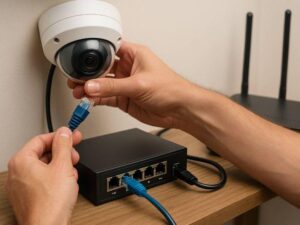
IP cameras normally use Ethernet networking, with PoE often used to provide both network connectivity and power over compatible Ethernet cabling. Cable routes should be planned carefully, labeled where appropriate and protected from physical damage and environmental exposure.
5. NVR and Storage Installation
The NVR provides centralized recording and management for many IP CCTV systems. Storage capacity should be selected according to the number of cameras, resolution, recording mode and required retention period. Surveillance-grade hard drives are commonly used for continuous video workloads.
6. Configuration
After the hardware is installed, the cameras and recorder need to be configured. This can include camera names, recording schedules, motion or event settings, user permissions, time settings, network configuration and remote-viewing options.
7. Testing and Handover
A professional installation should be tested before handover. The installer should verify camera views, recording, playback, night performance, network connectivity, storage status and remote access where included. The customer should also understand basic operation and how to retrieve recorded footage.
IP CCTV Installation in Kenya
IP CCTV systems transmit digital video over a network. They are well suited to modern business and institutional installations because cameras can be connected through network infrastructure and managed through an NVR or other compatible platform.
For larger installations, structured cabling, network switches, uplinks and bandwidth planning become important. The network should be designed to handle the expected camera traffic while leaving suitable capacity for other services where CCTV shares the infrastructure.
PoE CCTV Installation
Power over Ethernet can simplify IP camera installations by carrying data and electrical power over compatible Ethernet cabling. A PoE switch should have enough ports and power budget for the connected cameras. Cable distance and the camera’s supported PoE standard should also be checked before installation.
CCTV Installation for Businesses
Businesses often require surveillance at entrances, reception areas, offices, retail floors, warehouses, loading areas and parking facilities. A business CCTV design should balance coverage with privacy, recording requirements and ease of monitoring.
For larger sites, cameras can be grouped by security zone and connected to appropriately sized NVRs and network infrastructure. Remote monitoring can also allow authorized personnel to view the system away from the premises.
CCTV Installation for Homes
Residential installations commonly focus on gates, entrances, driveways, compounds, parking areas and other vulnerable points. Camera selection should take account of outdoor lighting, night-time visibility, weather exposure and the homeowner’s preferred method of viewing recordings.
CCTV Installation for Schools and Institutions
Schools, colleges and other institutions may require coverage across gates, walkways, buildings, parking areas and perimeter zones. Larger campuses may need multiple cameras, network switches, fiber links or multiple recording units depending on the size and layout of the site.
Outdoor CCTV Installation
Outdoor installations require additional planning. Cameras and accessories should have suitable environmental protection, while cables and connections should be routed and protected appropriately. Lighting, rain, dust, temperature and potential physical interference can all affect equipment selection and placement.
Remote Viewing and Mobile Monitoring
Many modern CCTV systems support remote viewing through compatible applications or network platforms. Remote access should be configured securely, with appropriate user permissions and strong authentication practices. Customers should avoid exposing surveillance equipment directly to the internet without suitable security controls.
Common CCTV Installation Mistakes
- Installing cameras without first assessing the site.
- Leaving important areas outside the camera’s field of view.
- Choosing resolution without considering viewing distance and lighting.
- Using unsuitable or poorly terminated cabling.
- Ignoring PoE power budgets on IP camera systems.
- Installing insufficient storage for the desired retention period.
- Failing to test recording and playback after installation.
- Using weak passwords or poorly secured remote access.
How to Choose CCTV Installation Services in Kenya
- Look for proper site assessment: The installer should understand your property before recommending equipment.
- Check system compatibility: Cameras, switches, NVRs, storage and accessories should work together.
- Ask about cabling: Professional cable routing and termination improve reliability and maintenance.
- Discuss storage: Make sure the proposed system can retain footage for your required period.
- Confirm testing: The completed system should be tested during both day and night conditions where applicable.
- Consider future expansion: Leave appropriate network, recording and cable capacity for additional cameras.
CCTV Installation and Maintenance
Installation is only the beginning of the CCTV system lifecycle. Regular maintenance can help identify dirty lenses, damaged cables, storage problems, network faults, outdated configurations and other issues before they affect security coverage.
For businesses and institutions, periodic system checks can include camera health, recording status, HDD condition, network connectivity, backup procedures and remote-access security.
Why Choose M Heritage Technologies?
M Heritage Technologies provides ICT and security technology solutions for businesses, institutions and homes in Kenya. We can assist with CCTV planning, camera selection, IP networking, PoE infrastructure, NVR configuration, storage planning, installation and ongoing maintenance.
Our objective is to build a surveillance system around the actual security requirements of the site, rather than simply installing cameras without considering coverage, recording and long-term operation.
Frequently Asked Questions About CCTV Installation Services in Kenya
How much does CCTV installation cost in Kenya?
The cost varies according to the number and type of cameras, cable distances, mounting requirements, NVR and storage capacity, network equipment and site complexity. A site assessment is the best way to develop an accurate quotation.
How long does CCTV installation take?
Installation time depends on the number of cameras, building layout, cable routes, mounting conditions and system complexity. A small installation can be completed much faster than a large commercial or institutional project.
Can CCTV cameras work without internet?
Yes. A local CCTV system can record to an NVR without an internet connection. Internet connectivity is generally needed for features such as remote viewing, cloud services or remote notifications.
Do IP cameras need a PoE switch?
Not always. A PoE-compatible IP camera can receive power from a compatible PoE switch or injector, while some installations use separate power supplies. The appropriate method depends on the camera and network design.
Can existing CCTV systems be upgraded?
In many cases, yes. The upgrade options depend on the existing cameras, cabling, recorder, storage and network infrastructure. A technical assessment can determine which components can be retained and which should be replaced.
Looking for CCTV Installation Services in Kenya? Contact M Heritage Technologies for professional CCTV planning, installation, NVR configuration, networking, storage and ongoing surveillance support.