


Access Control Systems in Kenya
Access Control Systems in Kenya: 7 Powerful Ways to Improve Security
Access Control Systems in Kenya help businesses, institutions and property owners control who can enter specific areas and when access is permitted. Instead of relying only on traditional keys, modern access control can use fingerprints, PINs, cards, facial recognition and other authentication methods to manage entry.
A well-designed access control system can improve security while making it easier to manage employees, visitors and restricted areas. It can be deployed at office doors, server rooms, warehouses, apartment buildings, schools, hospitals and other locations where controlled entry is important.
What Are Access Control Systems?
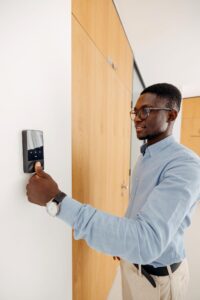
An access control system is a security solution that determines whether a person should be allowed to enter a protected area. A typical system includes an authentication device, an electronic lock or door mechanism, a controller and software for managing users and permissions.
Depending on the installation, users may authenticate themselves with a fingerprint, PIN, access card, mobile credential or facial recognition. The system checks the credential against its configured permissions and allows or denies entry.
7 Powerful Benefits of Access Control Systems
1. Control Who Can Enter
Organizations can define who is authorized to enter particular rooms, offices or buildings. This is useful for sensitive areas such as server rooms, records departments, stores and management offices.
2. Reduce Dependence on Physical Keys
Lost or copied keys can create security concerns. Electronic credentials can normally be disabled or changed without replacing every physical lock.
3. Improve Access Accountability
Many systems maintain event records showing access activity. Authorized administrators can review when credentials were used, helping organizations improve accountability and investigate incidents.
4. Manage Employee Access
Businesses can assign access permissions according to departments, working hours or restricted areas. When an employee changes role or leaves, their access can be modified or disabled.
5. Protect Sensitive Areas
Not every employee or visitor needs access to every part of a facility. Access control adds a layer of protection for areas containing equipment, confidential information, stock or valuable assets.
6. Support Visitor and Multi-User Management
Depending on the platform, systems can support temporary credentials, visitor access and different user permission levels. This can make entry management more organized.
7. Integrate with Other Security Systems
Access control can work alongside CCTV, alarms, intercoms and other security technologies, creating a more complete security environment.
Types of Access Control Systems
Biometric Access Control
Biometric systems identify users using characteristics such as fingerprints or facial features. They can be convenient because users do not necessarily need to carry a physical card.
PIN and Keypad Access Control
PIN-based systems require a user to enter a code on a keypad. They are useful where a simple authentication method is preferred. Organizations should avoid shared or easily guessed codes.
Card and RFID Access Control
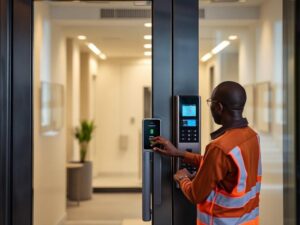
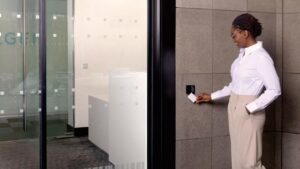
Card-based systems use access cards, tags or other credentials. They are widely used in offices and commercial facilities because credentials can be assigned to individual users and disabled when necessary.
Facial Recognition Access Control
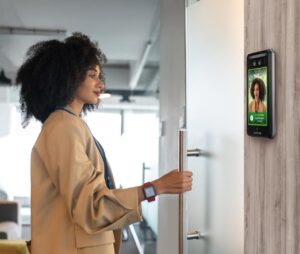
Facial recognition terminals authenticate users using facial characteristics. Depending on the device, they may also support cards or PINs. Proper configuration and privacy practices are important when deploying biometric technologies.
Access Control for Offices and Businesses
Access Control Systems in Kenya are useful for controlling entry to offices, reception areas, stores, server rooms and other restricted spaces. Businesses can assign permissions according to staff roles and operational requirements.
For larger offices, access control can be combined with CCTV to provide both entry management and visual verification. The system should be designed so administrators can manage users without giving unnecessary access to sensitive security functions.
Access Control for Schools and Institutions
Schools, colleges, hospitals and other institutions often have areas that require controlled access. Access control can help manage entry to administration offices, laboratories, records rooms, staff-only areas and other restricted locations.
Access Control for Apartments and Residential Properties
Apartment buildings, gated communities and residential developments can use access control to manage entrances, common areas and restricted facilities. Card, PIN, biometric and other systems can be selected according to property requirements.
How Access Control Works
When a person presents a credential, the reader captures the credential information and sends it to the controller or processing system. If the credential is valid and the user has permission for that door at that time, the system activates the locking mechanism.
Access Control and CCTV Integration
Combining access control with CCTV can strengthen security visibility. When an access event occurs, security personnel may be able to review the corresponding camera view. This can make it easier to verify activity around important entrances.
How to Choose an Access Control System
- Identify the doors and areas requiring controlled access.
- Estimate users and future growth.
- Choose biometric, card, PIN, facial recognition or a combination.
- Consider indoor and outdoor environmental requirements.
- Determine whether schedules and event reporting are needed.
- Check compatibility with locks, doors and existing security systems.
- Consider CCTV, intercom and alarm integration.
- Plan power backup and reliable networking for critical installations.
Security and Privacy Considerations
Access credentials should be managed carefully. Administrators should use appropriate permissions, remove inactive users and protect management accounts. Biometric systems require additional consideration because biometric information is sensitive and should be handled according to applicable privacy and data-protection requirements.
Why Choose M Heritage Technologies?
M Heritage Technologies provides ICT, networking and security technology solutions for customers in Kenya. We can help with access-control planning, equipment selection, installation, configuration and integration with related security infrastructure.
Frequently Asked Questions
What is the best type of access control system?
There is no single best system for every site. Fingerprint, facial recognition, card and PIN systems each have different advantages. The right choice depends on users, security requirements, environment, budget and integration needs.
Can access control be connected to CCTV?
Yes. Compatible access-control and CCTV platforms can be integrated so entry events and video surveillance work together.
Can access control work during a power outage?
Yes, when the installation includes suitable backup power such as a UPS or supported power solution. Requirements depend on the doors, locks and controllers.
Can an employee’s access be removed?
Yes. In a properly managed electronic access-control system, an administrator can normally disable or remove a user’s credential without changing the physical lock.
Are biometric access control systems suitable for businesses?
Yes. They can be suitable where convenient authentication and controlled access are important. Privacy, enrollment, system security and operational requirements should be considered.
Improve Entry Security with Access Control
Modern access control provides a practical way to manage who can enter protected areas while improving accountability and reducing dependence on traditional keys. With the right combination of authentication, electronic locking, management software and supporting security systems, organizations can create a more controlled entry environment.
Need Access Control Systems in Kenya? Contact M Heritage Technologies for access-control solutions, installation and integration tailored to your business, institution or property.