


CCTV Remote Monitoring in Kenya
CCTV Remote Monitoring in Kenya: 7 Powerful Benefits for Smarter Security
CCTV Remote Monitoring in Kenya allows authorized users to view and manage surveillance systems even when they are away from the premises. Instead of relying only on a monitor inside an office or security room, businesses and institutions can use secure network connections to check live camera feeds, review recordings and receive important event notifications remotely.
For organizations with offices, shops, warehouses, schools, residential properties or multiple locations, remote monitoring can improve security awareness and reduce the need to be physically present at every site.

What Is CCTV Remote Monitoring?
CCTV remote monitoring connects a surveillance system to a secure network so an authorized person can access camera feeds or recordings from another location. Depending on the system, access may be available through a computer, smartphone, tablet or dedicated monitoring station.
A typical setup includes IP cameras, an NVR or other recording platform, network equipment, storage, an internet connection and a secure remote-access method. The exact configuration depends on the site and the equipment being used.
7 Powerful Benefits of CCTV Remote Monitoring
1. View Your Property from Anywhere
Remote access lets authorized users check live camera views without being at the premises. This can be useful for business owners, facility managers and security teams who need visibility while travelling or managing several locations.
2. Faster Awareness of Security Events
When supported by the CCTV system, event notifications can draw attention to motion, line-crossing, intrusion or other configured events. Faster awareness can help responsible personnel investigate a situation sooner.
3. Review Recorded Footage Remotely
Remote access can also provide access to stored recordings. Users may be able to search by date, time or event and review footage without returning to the physical recorder location.
4. Manage Multiple Locations
Organizations with branches or separate facilities can benefit from centralized visibility. A properly designed system can allow authorized personnel to monitor several sites from a suitable control point, subject to network and system capabilities.
5. Improve Operational Oversight
CCTV is not only about security incidents. Authorized managers can use live views to understand activity around entrances, loading areas, reception points and other important zones while respecting applicable privacy requirements.
6. Support Security Teams
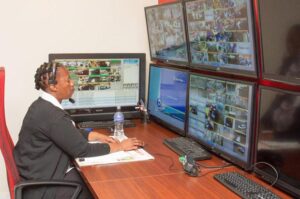
Remote monitoring can complement guards and on-site security staff. A monitoring team can review camera feeds and help direct attention to areas that require investigation rather than depending entirely on physical patrols.
7. Make Better Use of Existing CCTV Infrastructure
If an existing IP CCTV system and recorder support secure remote access, a business may be able to add remote viewing without replacing every camera. A technical assessment can determine whether the current network, recorder and internet connection are suitable.
How Remote CCTV Monitoring Works
In a typical IP CCTV installation, cameras send video across the local network to an NVR or another recording platform. The recorder stores footage and provides the functions needed for live viewing and playback. A secure remote-access configuration then allows authorized users to connect from outside the local network.
The quality of remote viewing depends on factors such as camera resolution, number of simultaneous users, recording settings, network capacity and available internet bandwidth.
Mobile Phone and Remote CCTV Viewing
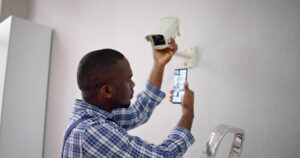
Mobile viewing is one of the most convenient parts of remote surveillance. Depending on the manufacturer and system configuration, a mobile application may allow an authorized user to view live feeds, review recordings, receive alerts and access selected camera controls.
Strong passwords, appropriate user permissions and secure authentication should be used. Remote access should never be configured simply by exposing equipment unnecessarily to the public internet.
Internet and Network Requirements
Reliable remote monitoring starts with a properly designed local network. IP cameras, PoE switches, NVRs and routers should be correctly connected and configured. Internet service must also provide sufficient upload capacity for the required remote video streams.
For larger installations, network segmentation, bandwidth planning and appropriate cybersecurity controls can improve reliability and security. Where internet connectivity is unstable, the local CCTV system should still be designed to continue recording whenever possible.
NVR, Cloud and Hybrid Monitoring
Many professional CCTV systems use an NVR to record video locally while providing secure remote access. Some solutions also use cloud services or cloud-connected applications for selected functions. A hybrid approach can combine local recording with remote access and centralized management.
The right approach depends on storage requirements, internet reliability, desired retention, privacy considerations, budget and the capabilities of the chosen CCTV platform.
CCTV Alerts and Event Notifications
Remote monitoring becomes more useful when important events can be highlighted. Depending on the camera and recorder, systems may support features such as motion detection, line crossing, intrusion detection, people or vehicle detection and other analytics.
Alerts should be configured carefully. Excessive false notifications can cause users to ignore genuine events, while overly restrictive settings may miss activity that matters.
Remote Monitoring for Businesses and Institutions
CCTV Remote Monitoring in Kenya can support offices, retail stores, warehouses, schools, residential developments, hotels, factories and other facilities. It is particularly useful where managers need visibility beyond normal working hours or where several locations must be supervised.
For multi-site organizations, the system should be planned around user permissions, network connectivity, recording requirements and a clear monitoring responsibility.
Security and Privacy Considerations
Remote CCTV access should be treated as part of an organization’s IT security. User accounts should be limited to authorized personnel, strong credentials should be used, unnecessary accounts should be removed and system software should be kept appropriately maintained.
Organizations should also consider privacy, signage, access to recorded footage and internal policies governing who can view or export surveillance video.
How to Choose a Remote CCTV Solution
- Determine how many cameras and locations need remote access.
- Choose cameras and NVRs that support the required remote-management features.
- Check internet reliability and available bandwidth.
- Plan sufficient recording storage and retention.
- Define user roles and access permissions.
- Decide which alerts and analytics are actually useful.
- Include network, power and cybersecurity requirements in the design.
Why Choose M Heritage Technologies?
M Heritage Technologies provides ICT, networking and security technology solutions for customers in Kenya. We can help assess CCTV requirements, network connectivity, NVR systems, remote viewing and related infrastructure.
Whether you need remote access for one site or centralized visibility across multiple locations, the system should be designed around reliability, security and ease of management.
Frequently Asked Questions
Can I view my CCTV cameras from my phone?
Yes, if the cameras or recorder support secure remote viewing and the system has been correctly configured. The available functions depend on the manufacturer, model and network setup.
Does remote CCTV monitoring require internet?
Remote access from outside the premises generally requires internet connectivity or another suitable network connection. Local recording can often continue even when external connectivity is temporarily unavailable, depending on the system design.
Can I monitor CCTV cameras from another branch?
Yes. Multi-site CCTV systems can be designed to provide authorized users with centralized access to cameras at different locations, provided the network and surveillance platforms support the required architecture.
Is remote CCTV viewing secure?
It can be secure when properly configured. Access controls, strong authentication, appropriate network security and regular system maintenance are important for protecting surveillance systems.
Get Reliable Remote CCTV Monitoring
Remote surveillance can give businesses and institutions greater visibility, faster awareness of important events and convenient access to recorded footage. The best results come from combining suitable cameras, reliable recording, a properly designed network and secure remote access.
Need CCTV Remote Monitoring in Kenya? Contact M Heritage Technologies for CCTV, networking and remote surveillance solutions tailored to your site.